

Block Heaters and Cold-Weather Tips for Your LS Tractor
It’s that time of year again: the mornings are getting colder, and winter is warming up in the wings. Some of us dread the cold and would happily skip straight to spring. But winter is coming either way, so a little preparation now can make those chilly starts easier—and help keep your LS tractor ready when you need it.
Cold weather can make a diesel engine harder to start and puts extra work on the battery. A block heater can help by warming part of the engine before you turn the key.
The right heater depends on your LS model, engine, local weather, and access to electricity. Check your operator’s manual or ask an LS dealer before buying or installing one.
What does a block heater do?
A block heater warms part of the engine before you start the tractor. This can make the engine easier to start in very cold weather and help it warm up sooner.
A heater does not replace the normal cold-start steps in your manual. You still need a healthy battery and should let the tractor warm up as directed. Check the manual for your model and serial number, or ask an authorized LS dealer. You can find manuals on the LS Owner Manuals page.
Types of engine heaters
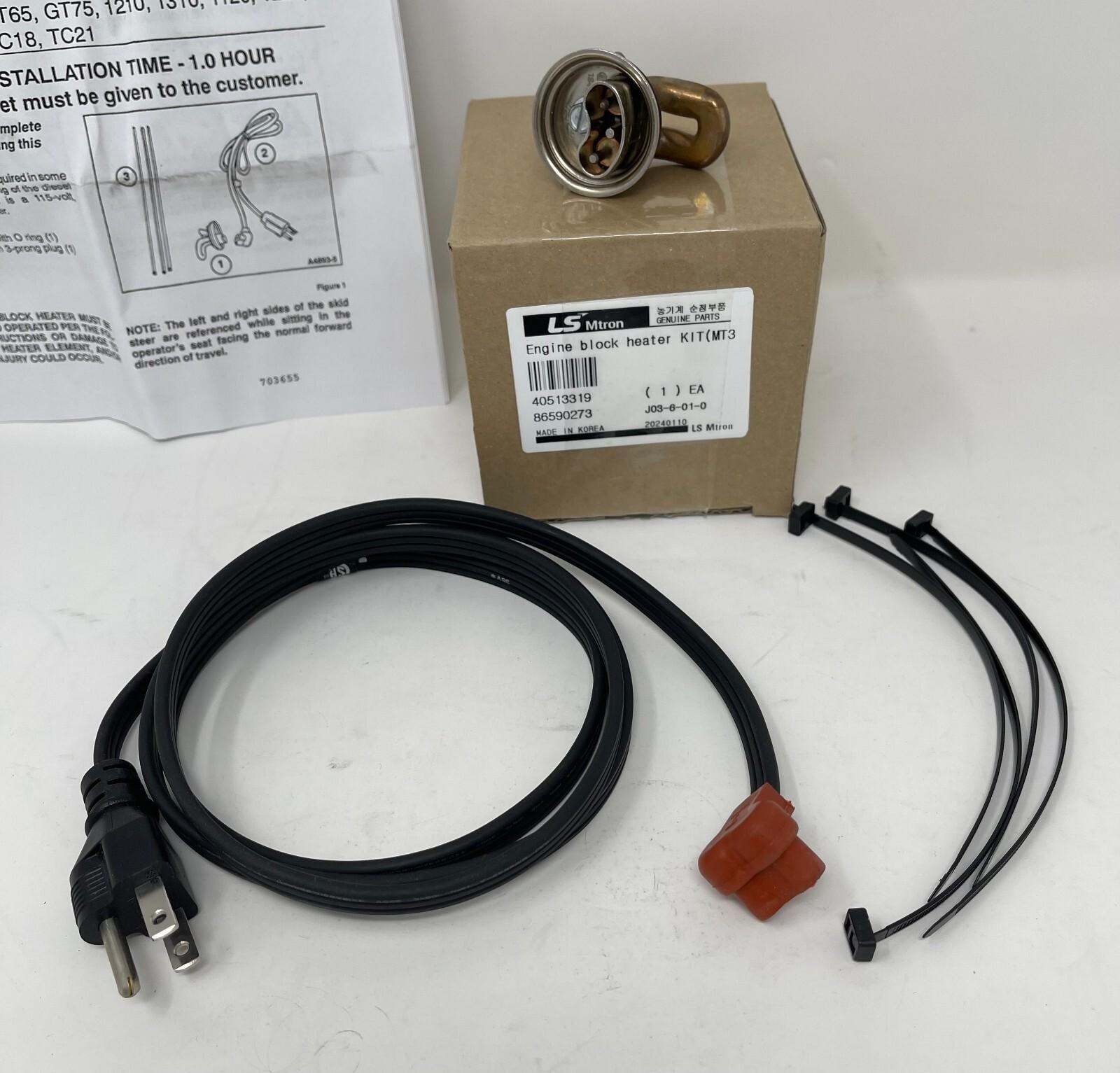
Model-specific coolant heater
This is a good option to ask your LS dealer about first. It is made for a certain engine and installed in the location designed for it. Ask the dealer to confirm the right part for your model and serial number and explain how it should be installed.
Inline coolant heater
This heater warms engine coolant in a hose or separate circuit. Some types move the warmed coolant through the engine. Others may not spread the heat as well. Use only a heater approved for your engine, and follow its installation instructions. A heater that fits a hose may still be the wrong one for your tractor.
Oil-pan heater
An oil-pan heater warms the engine oil from outside the pan. It may be useful in some setups, but the heater must be approved for the tractor and the type of oil pan. Install it exactly as directed. Keep it away from fuel, wiring, hoses, and anything that could catch fire.
Magnetic heater
A magnetic heater sticks to a metal surface and warms the spot it touches. Check that the surface is suitable and follow the heater maker’s instructions. It warms only a small area, so it may not work as well as a model-specific engine heater.
Other ways to help your tractor in winter
Take care of the battery
Cold weather makes it harder for a battery to provide power. Before winter, check its condition and make sure the connections are clean and tight. If the tractor sits for a long time, a compatible battery maintainer can help keep the battery charged. A maintainer does not warm the engine.
Follow the starting steps in your manual
Use the glow plugs or other starting aid as your manual describes. Do not crank the starter longer or more often than the manual allows. Long or repeated attempts can drain the battery and damage the starter. If the tractor does not start, pause and look for the cause.
Use the right oil and fuel
Check your manual to see which engine oil is right for the temperatures in your area. In winter, use diesel fuel suited to your region and the weather. If you use an anti-gel additive, choose one made for diesel and follow its directions. Keep the fuel filter and water separator serviced as the manual says.
Park in a sheltered spot
A dry place out of the wind can help protect your tractor from snow and freezing rain. If you use a cover, keep the air intake and exhaust clear, and remove the cover before starting the tractor.
Never use a torch, open flame, or unapproved heater to warm the engine or fuel system.
How to choose a heater
Before you buy, ask:
- What does my manual recommend? Check the sections on cold-weather starting, engine oil, and warm-up.
- How cold does it get where I park? In mild weather, a good battery and the normal starting steps may be enough. In very cold weather, an approved engine heater may help.
- Can I plug it in safely? If not, ask your dealer about other options and focus on the battery, fuel, oil, and where you park.
- Will it fit my exact tractor? Ask an LS dealer to check your model and serial number before you buy. Different engines and model years may need different parts.
A winter setup might include an approved engine heater, a charged battery, the right oil and fuel, and the starting steps in your manual. Adding more heaters does not always help. Use equipment that is made for your tractor and installed correctly.
Using an engine heater safely
- Follow the LS manual and the heater maker’s instructions.
- Check the cord and plug for cuts, cracks, loose connections, or heat damage.
- Use an outdoor-rated extension cord that can handle the heater’s power needs. Use a grounded outlet and GFCI protection outdoors or in damp areas. Keep connections dry.
- Keep cords away from hot or moving parts, and where people, animals, or equipment could damage them.
- Follow the heater maker’s advice on how long to run it. The right time depends on the heater and the weather.
- Unplug the heater before moving or servicing the tractor. Make sure no cord can get caught in moving parts when you start it.
- Never use an open flame or an unapproved space heater under the hood.
After starting, follow the warm-up steps in your manual. Drive gently at first. Cold hydraulic and transmission fluids may need time to warm up; an engine heater does not warm them right away.
In short
A block heater can help with very cold starts, but it must be right for your LS tractor’s engine. Check your manual or ask an LS dealer to confirm the correct heater. Keep the battery charged, use the right oil and fuel, follow the starting steps, and use the heater safely.
Recent Posts
-

Block Heaters and Cold-Weather Tips for Your LS Tractor
It’s that time of year again: the mornings are getting colder, and winter is warming up in the wings …Oct 29th 2026 -
Going Off the Grid: Essential Tips for a Self-Sufficient Property
Things to Keep in Mind When Taking Your Property Off the Grid How smart planning – and the right equ …Sep 9th 2026 -
The Benefits of Aeration
The Benefits of Aeration A pristine lawn lays the foundation for any perfect backyard life. But t …Sep 4th 2026